Showing posts with label phthalates. Show all posts

Saturday, May 12, 2007

There’s something fishy going on.


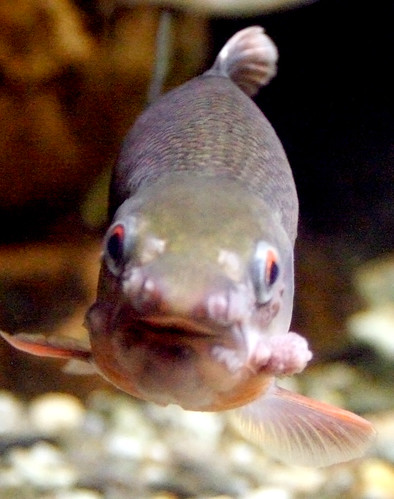
Researchers studying water and aquatic life have found males of several species of fish whose gonads don’t quite match up. In waterways around Seattle, some male English sole have proteins normally only found in females. Male Potomac River bass and sunfish have been found carrying immature eggs. Down in Nevada, male carp in a particular lake – one subject to Las Vegas wastewater runoff – have depressed levels of male sex hormones and smaller than average testes. And in California, male fish off the coast of LA and Orange County have been found with ovarian tissue in their testes. Feminized fish are also found in England, Japan, and Denmark.

The culprit? Many would have you look no further than that little pack of pills on your bedside table. Synthetic estrogens in hormonal birth control trick the body out of ovulating, but they don’t just stay in the body and build up forever. A woman takes her pill with her morning coffee, drinks her eight glasses of water a day, and eventually those hormones get flushed town the toilet. When wastewater is spilled or leaks into waterways (through leaky sewers and pipes, storm drain overflow, or from wastewater treatment centers), those hormones are released into the wild, where they act as endocrine disruptors for fish. The endocrine system regulates growth and development in all animals – disrupt it, and you get animals that don’t develop correctly.

Scientists have found relatively low levels of estrogens in most of the bodies of water examined, but those low levels have been enough to have an impact on the development of aquatic life, and many are concerned for the reproductive future of fish. If you’re not worried (you never really liked fish anyway), think about the worst case scenario: feminization of male fish leads to widespread reproductive failure, declining fish supplies, the collapse of the fishing industry, increased reliance on non-aquatic protein supplies, and not enough land for the necessary increase in agriculture. It would be a problem in the US, but for Japan it would be a disaster, and for non-industrial countries relying primarily on protein from fish it would probably be the beginning of the end.

But we’re not there yet. Doomsday scenario aside, there is something going on with all those estrogens. Many news reports have implied that the bulk of the blame lies with hormonal birth control (and, to a lesser extent, hormone replacement therapy), meanwhile ignoring the vast number of estrogen-mimics in the environment from pollutants. Chemicals contained in many detergents, in bath oils and some cosmetics, and in pesticides act as endocrine disruptors in the same fashion as synthetic estrodiol. Even more pervasively, plastics often contain ingredients that mimic estrogens – one of which, bisphenol A, has been linked to birth defects in humans. These chemicals are often referred to as ‘ubiquitous’ by researchers who realize that the compounds will be found (in varying degrees) in essentially any water test performed.

Hormonal birth control, meanwhile, may be one of the most sustainable inventions ever created – if we use it properly. Because pills are relatively expensive and difficult to distribute (both problems which probably wouldn’t be that hard to overcome), their use in developing countries has yet to become widespread. Giving women and families the option of hormonal birth control (along with condoms and education) could go a long way towards solving the population problem. Otherwise, dwindling resources coupled with increasing populations will likely lead to population control via genocide and war (as in Rwanda; Jared Diamond’s extraordinary book Collapse does a great job of analyzing that scenario).

It’s true that synthetic hormones in birth control are contributing to the feminization of fish. As a first world country, we should take the lead in developing birth control methods that are even more sustainable – both personally and globally. For the time being, women who would prefer birth control sans hormones can consider using a diaphragm or IUD.

Meanwhile, cutting back drastically on our nasty plastic habit would decrease the amount of trash in our landfills, the level of endocrine disruptors in our water, and our over-dependence on petrochemicals. That’s three problems in one fell swoop.

Researchers are working on ways to filter endocrine blockers out of wastewater, and no one is actually suggesting that women should stop using hormonal birth control. Still, the Pill is getting an undue amount of attention in the fish feminization scandal. We (the media, all of it) should put a little more emphasis on the plastics industry and the byproduct of our petrochemical dependence.

(fabulous fish photo by wistine)

Friday, March 30, 2007

Tantus G-Spot Review and a Headache

Contoured silicone G-spot didlo with flared base and vibrating microstimulator.
My review of the Tantus G-spot is up at EdenFantasys!

Products from Tantus are hand-made with high-quality silicone. No phthalates there, folks! This wasn't the best toy I've ever used, but I think it would make a good g-spot toy for use with a harness, so if you use one of those you should check it out.

In other news: apparently my immune system survives full-on attacks better than guerrilla warfare. Ten days of throwing caution to the wind with my sick boyfriend got me approximately two days of mildly sore throat. Then my roommate got sick, and somehow -- even though I make out with her a lot less than I make out with my beau -- today I feel like hell. Go figure.

Thursday, March 01, 2007

Linkage: HIV, HPV, Don't Ask Don't Tell and More

Good Vibrations is going phthalate free! The company has decided to stop producing toys with potentially toxic plastic softeners. Adam and Eve made the same decision a month or so ago. California Exotics has produced a list of all their phthalate-free products, and Doc Johnson (although stubbornly asserting that there's nothing wrong with a little bit of phthalate now and then) has begun labeling their safe toys as phthalate-free. Bravo to the sex toy industry for stepping up on this one. Sex toys in Europe are regulated by the government, but I'd much rather have the industry police itself. Can you imagine if the FDA was given any power over sex toys? We'd soon be resorting to vegetables (which must be what folks in Alabama do, right?).

From RH Reality Check, the HIV epidemic hits home:
Imagine that you live in a country where HIV infection rates are on the rise. In your nation's capital, one out of every 20 people is HIV positive. In some socially marginalized communities, nearly half of people are HIV positive.

In this place, about half of all people who need to be taking HIV medication to stay healthy are unable to access medication on an ongoing basis, and some have died while on waiting lists for drugs. Hundreds of thousands of HIV positive people pass through prisons and jails each year, and no effort is made to coordinate education, prevention or social services for them.


Meanwhile, the New York Times reports on two new HIV drugs. One of the drugs is the first to work on the body's cells rather than the virus itself -- it blocks the point at which the virus gains access to the cell. Not surprisingly, there are debates going on about the long-term effects of the drug -- similar drugs that have undergone testing previously have led to increased blood cancer rates and liver toxicity. Tests for Merck's new drug haven't demonstrated any of those effects yet, though, so this drug seems to have a lot of potential.

Also from the New York Times, a study tracking the prevalence of HPV in women found that about 25% of women are infected with some strain of the virus -- and among women ages 20-24, the number rises to almost 45%. Do I even need to say it? If you're eligible, go get vaccinated.

Again from RH Reality Check, Marylin Keefe discusses aspects of the HPV vaccine issue that are getting overlooked in all the arguments about parents' rights and promiscuity -- for example, the fact that none of that matters if no one can afford it:
There are nearly 17 million uninsured women in the United States, a number that grows daily. Many women—especially in the 19-26 year old aged group, don't have any type of insurance—public or private. At $360 for the vaccine, it is certain to be out of reach, even if they can even find a health care provider who offers it.


Massachusetts Rep. Marty Meehan introduced legislation that would reverse the military's discriminatory "Don't Ask, Don't Tell" policy. One hundred six Democrats and three Republicans co-sponsored the bill, with the general rallying cry that discriminating against LGB folks is bad for the country's defense. I suppose that's a good way to get the bill passed, but "Yeah! Let gay people into the military so we can send them off to fight in unjustified wars!" is something I have trouble getting behind.

And let's finish things off right: I don't watch America' Next Top Model, but judging from this photo, maybe I should start... just for the record, I think the photos of Jael that have turned up are very tasteful. And hot. Photo below the fold!