Showing posts with label birth control. Show all posts

Saturday, May 12, 2007

There’s something fishy going on.


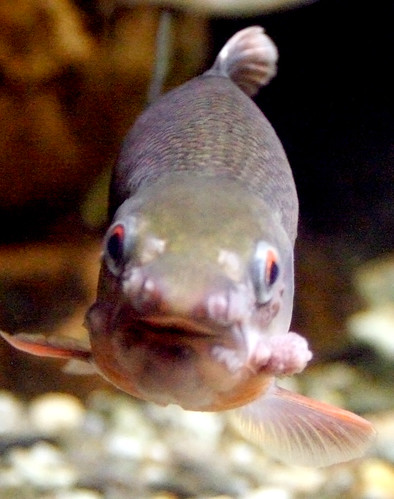
Researchers studying water and aquatic life have found males of several species of fish whose gonads don’t quite match up. In waterways around Seattle, some male English sole have proteins normally only found in females. Male Potomac River bass and sunfish have been found carrying immature eggs. Down in Nevada, male carp in a particular lake – one subject to Las Vegas wastewater runoff – have depressed levels of male sex hormones and smaller than average testes. And in California, male fish off the coast of LA and Orange County have been found with ovarian tissue in their testes. Feminized fish are also found in England, Japan, and Denmark.

The culprit? Many would have you look no further than that little pack of pills on your bedside table. Synthetic estrogens in hormonal birth control trick the body out of ovulating, but they don’t just stay in the body and build up forever. A woman takes her pill with her morning coffee, drinks her eight glasses of water a day, and eventually those hormones get flushed town the toilet. When wastewater is spilled or leaks into waterways (through leaky sewers and pipes, storm drain overflow, or from wastewater treatment centers), those hormones are released into the wild, where they act as endocrine disruptors for fish. The endocrine system regulates growth and development in all animals – disrupt it, and you get animals that don’t develop correctly.

Scientists have found relatively low levels of estrogens in most of the bodies of water examined, but those low levels have been enough to have an impact on the development of aquatic life, and many are concerned for the reproductive future of fish. If you’re not worried (you never really liked fish anyway), think about the worst case scenario: feminization of male fish leads to widespread reproductive failure, declining fish supplies, the collapse of the fishing industry, increased reliance on non-aquatic protein supplies, and not enough land for the necessary increase in agriculture. It would be a problem in the US, but for Japan it would be a disaster, and for non-industrial countries relying primarily on protein from fish it would probably be the beginning of the end.

But we’re not there yet. Doomsday scenario aside, there is something going on with all those estrogens. Many news reports have implied that the bulk of the blame lies with hormonal birth control (and, to a lesser extent, hormone replacement therapy), meanwhile ignoring the vast number of estrogen-mimics in the environment from pollutants. Chemicals contained in many detergents, in bath oils and some cosmetics, and in pesticides act as endocrine disruptors in the same fashion as synthetic estrodiol. Even more pervasively, plastics often contain ingredients that mimic estrogens – one of which, bisphenol A, has been linked to birth defects in humans. These chemicals are often referred to as ‘ubiquitous’ by researchers who realize that the compounds will be found (in varying degrees) in essentially any water test performed.

Hormonal birth control, meanwhile, may be one of the most sustainable inventions ever created – if we use it properly. Because pills are relatively expensive and difficult to distribute (both problems which probably wouldn’t be that hard to overcome), their use in developing countries has yet to become widespread. Giving women and families the option of hormonal birth control (along with condoms and education) could go a long way towards solving the population problem. Otherwise, dwindling resources coupled with increasing populations will likely lead to population control via genocide and war (as in Rwanda; Jared Diamond’s extraordinary book Collapse does a great job of analyzing that scenario).

It’s true that synthetic hormones in birth control are contributing to the feminization of fish. As a first world country, we should take the lead in developing birth control methods that are even more sustainable – both personally and globally. For the time being, women who would prefer birth control sans hormones can consider using a diaphragm or IUD.

Meanwhile, cutting back drastically on our nasty plastic habit would decrease the amount of trash in our landfills, the level of endocrine disruptors in our water, and our over-dependence on petrochemicals. That’s three problems in one fell swoop.

Researchers are working on ways to filter endocrine blockers out of wastewater, and no one is actually suggesting that women should stop using hormonal birth control. Still, the Pill is getting an undue amount of attention in the fish feminization scandal. We (the media, all of it) should put a little more emphasis on the plastics industry and the byproduct of our petrochemical dependence.

(fabulous fish photo by wistine)

Wednesday, March 28, 2007

Sex in the News: Rhythm Method Woes

Now birth control can be as easy as not having sex two weeks out of every month! We no longer have to worry about -- wait, WHAT? No sex for half of every month?

You've probably heard of the rhythm method. Young people often receive a simplistic version of this complex birth control method i.e. "A woman can count the days since her last period and not have sex around the 14th day, which is when she ovulates." The method is often joked about -- after all, this is the only form of family planning approved by the Catholic Church. How many married childless Catholics do you know?

Of course, not all women ovulate on the 14th day, and (when practiced correctly) the rhythm method is a lot more complex than just counting days. The sympto-thermal method of family planning (which has evolved from "counting days") requires a woman to wake up at the same time every morning to take her temperature (called basal body temperature), monitor her cervical secretions, and keep a fertility calendar. During her two most fertile weeks of the month -- which other research suggests is when she'll want it the most -- the couple must abstain from sex. A recently released report on a German study reveals that, when practiced properly (one might say "religiously"), the method has a .6% failure rate, which is comparable with hormonal birth control.

But according to this article in the Scientific American, failure rates for normal couples are actually much higher. I know, I know, you're shocked. You thought that young women, some of whom can't even remember to take their pill at the same time every day, would simply jump at the chance to get up early on weekends and get all up-close and personal with their lady-juices. Not to mention the fact that it's a good way to get out of sex for half the month -- more, if you don't have sex during your period -- since, of course, women don't actually enjoy sex.

Okay, I'll be serious. The thing is, if you're willing (and have the leisure) to be diligent about it, fertility awareness is a great option. It means you don't have to put hormones into your body -- and the environment -- in order to effectively avoid getting pregnant. Fertility awareness over long periods of time is also of use when it comes to intentionally getting pregnant. I'd even go so far as to argue that charting her fertility can put a woman more in touch with her body and her sexuality. This is a family planning method that deserves a place in the adult birth control arsenal. For the average person, though, this isn't going to be the right option.

So, what do we tell the kids? Not the kids, so much as the teens: a book called Cycle Savvy: The Smart Teen's Guide to the Mysteries of Her Body, which describes fertility cycles in detail, is stirring up debate among proponents of comprehensive sex ed. Some argue that giving teens too much information about their fertility cycles will lead them to have unprotected sex on days the believe they are "safe". Others say that young women should be given as much information as possible about their bodies, and support the book. Cycle Savvy doesn't go into detail about fertility charting or discuss in detail which days are less fertile. It contains no reference to any day of the month being "safe", and encourages young people to always use protection, describing fertility planning as a useful tool for adults.

All of that being said, I have a confession to make: as sex-educated as I am, I still consider the rhythm method when having sex. Not the fancy sympto-thermal method, either. I wouldn't say it's my primary birth control method, but I usually find myself counting days, as in "okay, I'm on day 15 of my 24 day cycle, what are the odds I'll get pregnant if something goes wrong?" And when I was younger, there was a point in time -- before my 17th birthday, when I went on the pill -- when I did use the so-called rhythm method as my sole form of birth control. If I'd had this book to explain to me just how complicated fertility awareness really is, maybe I'd have thought twice. I fail to see how arming girls with solid information about their own bodies could ever be a bad thing.

Tuesday, March 20, 2007

What is this strange thing you call blog posting?

Once upon a time I thought that my life would no longer be dictated by the university schedule after I'd obtained my Bachelor's, but a year later... sorry for the dearth of posts, kids, but it's spring break and I've been too busy having sex to write about it!

Yesterday, March 20th, was Back Up Your Birth Control day. Emergency contraception is available without a prescription to women over 18 now, and should be available at your local pharmacy. If you're a woman having potentially reproductive sex it's a good idea to keep a dose on-hand -- that way this is less likely to happen to you.

If was 7am on July 5th, and I woke up still tipsy in the arms of the guy I'd been dating (Mr. Spring, that is) on my best friend's couch. He wanted to leave -- he was restless, and possibly embarassed by my antics (our antics, to be fair) from the night before. I crept into my friend's bedroom, found my pants, kissed her and her boyfriend on the forehead and told them to call later. We were literally 20 minutes into the hour drive back to our hometown before I realized I wasn't wearing my shoes --I'd left them behind in my friend's room.

Somehow, as we drove along, the subject of birth control came up. We hadn't used a condom the night before, and I wasn't on birth control, but since he hadn't ejaculated inside of me I wasn't that worried (though there's still plenty of reason to worry in that situation). Or at least, I wasn't until I realized he was.

"What do you mean you're not on birth control?" He asked. I shrugged. "Look," I said, "I know it's a risk, but it's a fairly small one and I'm comfortable with it."

"Small risk?" he said incredulously, "My dad got both of his wives pregnant the first time he had sex with them. I come from a fertile family. It's a pretty big risk." Normally too emotionally unavailable to lose his cool this much, he was in quite a tizzy over some pre-ejaculate fluid.

"Okay, look, it's not like you actually came, so we're probably--"

"Yes I did," he cut me off, shooting me a quizical look. "When?" I demanded, wondering how I could possibly have missed it.

I won't go into much more detail, but he explained when and I guess I must have had more to drink than I thought, because... well, I just had no idea. Anyway, we decided on EC. I called my clinic for a prescription, but they were closed. Panicking, I hung up and we headed to the ER attached to the clinic in hopes that someone there would write a prescription.

My honey pulled a u-turn as we passed his house on the way to the hospital. "What are you doing?" I asked. "My folks are away," he responded, "and there's no way I'm going into a hospital for emergency contraception with you barefoot. You're borrowing my step-mom's shoes."

I got my EC and I didn't get pregnant, thank goodness, nor did anyone get the opportunity to make "barefoot and pregnant" jokes (until now!). The moral of the story, though, is go get some EC! It's so much easier to have it on hand than to chase it all over town in borrowed sneakers.