Showing posts with label sustainability. Show all posts

Saturday, May 12, 2007

There’s something fishy going on.


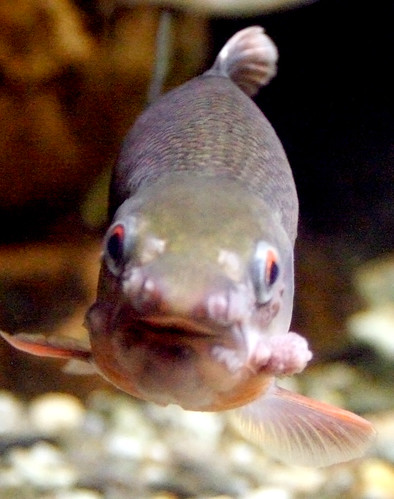
Researchers studying water and aquatic life have found males of several species of fish whose gonads don’t quite match up. In waterways around Seattle, some male English sole have proteins normally only found in females. Male Potomac River bass and sunfish have been found carrying immature eggs. Down in Nevada, male carp in a particular lake – one subject to Las Vegas wastewater runoff – have depressed levels of male sex hormones and smaller than average testes. And in California, male fish off the coast of LA and Orange County have been found with ovarian tissue in their testes. Feminized fish are also found in England, Japan, and Denmark.

The culprit? Many would have you look no further than that little pack of pills on your bedside table. Synthetic estrogens in hormonal birth control trick the body out of ovulating, but they don’t just stay in the body and build up forever. A woman takes her pill with her morning coffee, drinks her eight glasses of water a day, and eventually those hormones get flushed town the toilet. When wastewater is spilled or leaks into waterways (through leaky sewers and pipes, storm drain overflow, or from wastewater treatment centers), those hormones are released into the wild, where they act as endocrine disruptors for fish. The endocrine system regulates growth and development in all animals – disrupt it, and you get animals that don’t develop correctly.

Scientists have found relatively low levels of estrogens in most of the bodies of water examined, but those low levels have been enough to have an impact on the development of aquatic life, and many are concerned for the reproductive future of fish. If you’re not worried (you never really liked fish anyway), think about the worst case scenario: feminization of male fish leads to widespread reproductive failure, declining fish supplies, the collapse of the fishing industry, increased reliance on non-aquatic protein supplies, and not enough land for the necessary increase in agriculture. It would be a problem in the US, but for Japan it would be a disaster, and for non-industrial countries relying primarily on protein from fish it would probably be the beginning of the end.

But we’re not there yet. Doomsday scenario aside, there is something going on with all those estrogens. Many news reports have implied that the bulk of the blame lies with hormonal birth control (and, to a lesser extent, hormone replacement therapy), meanwhile ignoring the vast number of estrogen-mimics in the environment from pollutants. Chemicals contained in many detergents, in bath oils and some cosmetics, and in pesticides act as endocrine disruptors in the same fashion as synthetic estrodiol. Even more pervasively, plastics often contain ingredients that mimic estrogens – one of which, bisphenol A, has been linked to birth defects in humans. These chemicals are often referred to as ‘ubiquitous’ by researchers who realize that the compounds will be found (in varying degrees) in essentially any water test performed.

Hormonal birth control, meanwhile, may be one of the most sustainable inventions ever created – if we use it properly. Because pills are relatively expensive and difficult to distribute (both problems which probably wouldn’t be that hard to overcome), their use in developing countries has yet to become widespread. Giving women and families the option of hormonal birth control (along with condoms and education) could go a long way towards solving the population problem. Otherwise, dwindling resources coupled with increasing populations will likely lead to population control via genocide and war (as in Rwanda; Jared Diamond’s extraordinary book Collapse does a great job of analyzing that scenario).

It’s true that synthetic hormones in birth control are contributing to the feminization of fish. As a first world country, we should take the lead in developing birth control methods that are even more sustainable – both personally and globally. For the time being, women who would prefer birth control sans hormones can consider using a diaphragm or IUD.

Meanwhile, cutting back drastically on our nasty plastic habit would decrease the amount of trash in our landfills, the level of endocrine disruptors in our water, and our over-dependence on petrochemicals. That’s three problems in one fell swoop.

Researchers are working on ways to filter endocrine blockers out of wastewater, and no one is actually suggesting that women should stop using hormonal birth control. Still, the Pill is getting an undue amount of attention in the fish feminization scandal. We (the media, all of it) should put a little more emphasis on the plastics industry and the byproduct of our petrochemical dependence.

(fabulous fish photo by wistine)

Monday, May 07, 2007

Sustainable Underwear


Remember my quest for the perfect black lace bra? I found one. I’m not sure I’d call it perfect, but it is black lace and sexy as hell (if I do say so myself). I got the matching underwear, too, but because the website I bought the bra from didn’t have the underwear in black I had to buy it from a different company and have it shipped separately. The underwear arrived first, and as I unwrapped it I was totally blown away by the amount of packaging that had been used to send me one itty bitty piece of fabric.

It started with a brown shipping box, somewhere along the lines of 8x8x6. That’s a lot of box for not a lot of underwear. Inside the box, a couple of sheets of lavender tissue paper were meant to make me feel as though I was receiving a present. (An old trick. Back in my days at the toy store I was a sex-toy shipping queen: slip the toy into a satin storage bag, surround it with leopard print tissue, write the customer a glowing thank you note along with any care instructions for the toy, and toss in a few packets of lube to show our appreciation – that’s how you get repeat customers.) Beneath the tissue were two printouts – a return form, and an advertisement from the company – on standard paper, printed in color ink. And beneath that…

My underwear? Oh no. That would be too straightforward. Instead I found yet another box, this one about a tenth of the size of the first, printed with the fancy French lingerie company’s name. and inside that, finally, were my new panties – panties so small they fit literally in the palm of my hand. Amazing the resources that were used to get this little pair of underwear onto my bottom.

By amazing, of course, I mean sad and scary. I didn’t think to check the return address to see where they had been shipped from, but I’m guessing it was fairly far away (meaning lots of carbon output). Add to that the synthetic materials used to make the underwear, the fact that I have no idea where or how or under what conditions they were made, and you’ve got one very non-sustainable purchase. Shame on me. On the upside, the experience was significant guilt-inducing that I’ll be a lot more thoughtful the next time I purchase fancy undergarments.

Certain companies have caught on to the fact that we – ecologically conscious consumers of sexy stuff – want more than just organic cotton briefs (although those are great too). For great options in “green” underwear, check out Enamore, GreenKnickers, and Peau-Ethique. Also Buenostyle, whose "Eat Organic" panties are freaking hysterical, and BUTTA, whose products are made in Africa under good work conditions. The only problem is that every time I look at their website I can distinctly hear my first boyfriend hissing "bring me the butta" in his best mobster accent. Ah, memories.

Sunday, April 15, 2007

Spanking Dilemma Solved!


Isn't it beautiful? Coco de Mer, the company that makes it, uses fair-trade and renewable resources, and they make truly beautiful, classy looking products. The product description:
A classic wooden paddle, handcrafted by a passionate English spanker. This paddle is ethically made by a fair trade project in India and the wood from a substainable source. So spank away for a better world!
Good stuff, right? Their leather cuffs are beautiful as well, and totally belong on my kinky wishlist.

Friday, March 30, 2007

Tantus G-Spot Review and a Headache

Contoured silicone G-spot didlo with flared base and vibrating microstimulator.
My review of the Tantus G-spot is up at EdenFantasys!

Products from Tantus are hand-made with high-quality silicone. No phthalates there, folks! This wasn't the best toy I've ever used, but I think it would make a good g-spot toy for use with a harness, so if you use one of those you should check it out.

In other news: apparently my immune system survives full-on attacks better than guerrilla warfare. Ten days of throwing caution to the wind with my sick boyfriend got me approximately two days of mildly sore throat. Then my roommate got sick, and somehow -- even though I make out with her a lot less than I make out with my beau -- today I feel like hell. Go figure.

Wednesday, March 21, 2007

The Ultimate Green Sex Toy


We were talking about living green and reducing carbon footprints in the apartment tonight when my beau tapped me on the knee:

"Your job," he said, "is to make environmentally friendly sex toys."

From across the room, Roomie chimed in: "Isn't that what cucumbers are for?"

And this is why I love my friends.

Friday, March 09, 2007

Babeland's Eco-Sexy Kit


This is pretty awesome, and ties in nicely with the last post:
When you want something a bit racier to go with your organic strawberries, break out the Eco-Sexy Kit. This all-in-one kit includes the body-friendly Laya Spot vibrator and a selection of premium, all-natural spa products. The attractive Laya Spot is made of Elastomer, a new latex-free and phthalate-free material. The Babeland Massage Candle is made of skin-safe soy that transforms into warm, deliciously scented massage oil as it heats up. Emerita Natural Lube moisturizes while keeping things slick (and the company doesn't test on animals or use animal-derived ingredients). Top off your sexcapade with the Mamba Condoms, produced by a well-regarded Swedish non-profit whose testing process is 15 times more stringent than any other condom company in the world!


Can be purchased here, for what is actually a pretty good price.

TamPontification

Seventh Generation, makers of environmentally friendly everything, have launched a new internet campaign to donate feminine care products to shelters across the country. In the spirit of The Hunger Site, all you have to do to make a donation is to visit this website and drag the little heart into the little house. Here's the schpeil from their Facebook group:
Women’s shelters in the U.S. go through thousands of tampons and pads monthly, and, while agencies generally assist with everyday necessities such as toilet paper, diapers, and clothing, this most basic need is often overlooked- women hygiene.

You can help contribute to rectify this situation by making a VIRTUAL donation below!
For each VIRTUAL donation, Seventh Generation will send a pack of organic cotton tampons or chlorine-free pads to a shelter in your state.


Bear in mind that you can list any state you want as the recipient, it doesn't have to be the state you live in. Women in Kentucky need pads too.

Want to know more about Seventh Generation's chlorine-free pads & tampons? Go here.

Thursday, March 01, 2007

Linkage: HIV, HPV, Don't Ask Don't Tell and More

Good Vibrations is going phthalate free! The company has decided to stop producing toys with potentially toxic plastic softeners. Adam and Eve made the same decision a month or so ago. California Exotics has produced a list of all their phthalate-free products, and Doc Johnson (although stubbornly asserting that there's nothing wrong with a little bit of phthalate now and then) has begun labeling their safe toys as phthalate-free. Bravo to the sex toy industry for stepping up on this one. Sex toys in Europe are regulated by the government, but I'd much rather have the industry police itself. Can you imagine if the FDA was given any power over sex toys? We'd soon be resorting to vegetables (which must be what folks in Alabama do, right?).

From RH Reality Check, the HIV epidemic hits home:
Imagine that you live in a country where HIV infection rates are on the rise. In your nation's capital, one out of every 20 people is HIV positive. In some socially marginalized communities, nearly half of people are HIV positive.

In this place, about half of all people who need to be taking HIV medication to stay healthy are unable to access medication on an ongoing basis, and some have died while on waiting lists for drugs. Hundreds of thousands of HIV positive people pass through prisons and jails each year, and no effort is made to coordinate education, prevention or social services for them.


Meanwhile, the New York Times reports on two new HIV drugs. One of the drugs is the first to work on the body's cells rather than the virus itself -- it blocks the point at which the virus gains access to the cell. Not surprisingly, there are debates going on about the long-term effects of the drug -- similar drugs that have undergone testing previously have led to increased blood cancer rates and liver toxicity. Tests for Merck's new drug haven't demonstrated any of those effects yet, though, so this drug seems to have a lot of potential.

Also from the New York Times, a study tracking the prevalence of HPV in women found that about 25% of women are infected with some strain of the virus -- and among women ages 20-24, the number rises to almost 45%. Do I even need to say it? If you're eligible, go get vaccinated.

Again from RH Reality Check, Marylin Keefe discusses aspects of the HPV vaccine issue that are getting overlooked in all the arguments about parents' rights and promiscuity -- for example, the fact that none of that matters if no one can afford it:
There are nearly 17 million uninsured women in the United States, a number that grows daily. Many women—especially in the 19-26 year old aged group, don't have any type of insurance—public or private. At $360 for the vaccine, it is certain to be out of reach, even if they can even find a health care provider who offers it.


Massachusetts Rep. Marty Meehan introduced legislation that would reverse the military's discriminatory "Don't Ask, Don't Tell" policy. One hundred six Democrats and three Republicans co-sponsored the bill, with the general rallying cry that discriminating against LGB folks is bad for the country's defense. I suppose that's a good way to get the bill passed, but "Yeah! Let gay people into the military so we can send them off to fight in unjustified wars!" is something I have trouble getting behind.

And let's finish things off right: I don't watch America' Next Top Model, but judging from this photo, maybe I should start... just for the record, I think the photos of Jael that have turned up are very tasteful. And hot. Photo below the fold!


Wednesday, February 21, 2007

Linkage: Bad Vibes, Sex Ed, Veggie Love and More


Tristan Taormino's Pucker Up column has tackled the subject of phthalates in Dangerous Dildos (Part 1, Part 2). I like that she makes the distinction between "adult novelty" manufacturers and those who proudly craft and sell sexual aides:
When you look at the phthalate issue in a larger context, what you see is the current split within the sex toy industry between old-school adult novelty makers and new age sex-positive toy companies. The former are stuck in a model of "get it as cheap as you can from China, make it look like a penis (that's what women want, right?), and spend as little as you can on packaging." Toys from these companies scream, "Who cares if this looks good or actually works? No one's going to return it or complain, they'll be too embarrassed. Besides, it's just a dildo," reinforcing people's low expectations and shame.

In the article she mentions the Coalition Against Toxic Toys (badvibes.org). Their shopping guide gives fabulous advice for how to spot potentially hazardous toys -- take it with you on your next trip to the toy store!

At Mother Talkers, a group blog of "Rants and Raves on Modern Motherhood", Amy has written about her nephew's experience with public school sex education. Recounting a conversation between mother and son:
"What have you learned?" my sister asked.
"I learned about AIDS. That if you have unprotected sex, you get AIDS and die. But Mom, I don't even know what unprotected sex is. What is protected sex?"

Meanwhile, Oakland teens got so sick of cheesy sex-ed videos that they made their own:
The 15-minute movie was written, acted, filmed and edited almost entirely by students from East Oakland's Fremont Federation, a campus with four small high schools. With a hip-hop soundtrack and multidimensional characters — such as a peer educator who makes some poor decisions at a party — it was clearly made with its audience in mind.

The Condom Project has received support from the school district and had its premiere on Valentine's Day.

A Guardian piece discusses why rape charges so seldom lead to rape convictions in great detail, including the way stereotypes about women, previous sexual activity, and alcohol consumption on the part of the victim all contribute to the dismissal of the vast majority of rape cases. The whole thing goes right back to the Wilson case: why is the media championing this young man who was captured on film having sex with a semi-conscious woman? I'd really like to see some REAL journalism on the subject -- what evidence led to his acquittal on the rape charge? Did the alleged-victim recant, or was it simply a case of his word against hers? The whole thing makes me feel sick to my stomach.

HIV vaccine testing made the AP newswire this week. The article discusses how the test is being done on sex workers in the Dominican Republic. Since Phase 2 of the vaccine trial requires that it be tested on high as well as low risk groups, sex workers and injection drug users are obvious subjects. The tests are also being conducted in Haiti, the United States, Australia, Brazil, Canada, Jamaica and Peru. Merck, the company running the tests, is walking a thin public relations tightrope: If the trials are successful with no extreme adverse effects, they'll be heaped with praise. If something goes wrong, though, the papers (and eventually the history books) will be filled with scorn for the exploitative nature of the testing. HIV vaccine testing is a double-edged sword, but the impression that I get is that researchers are being as scrupulous as they can be in this inherently exploitative situation. Probably more to come on this soon.

The inaugural post is up on Veggie Love, the brand-new blog of my ever beautiful and brilliant roommate! Go check it out, and be jealous -- she cooks for me. Yeah, it's awesome.

Thursday, January 11, 2007

Sex Ed, Lady Farmers, and Thinking About Dogs

A couple of interesting sex ed tidbits: First, the Montgomery County (MD) board of education has approved a controversial new sexuality education curriculum which discusses homosexuality, but not its origins. The curriculum has detractors on both sides, with some saying that it doesn't go far enough in protecting LGBT students at the school and other arguing that "Absolutely nothing is allowed to be said that is negative about homosexuality." Which, as we all know, is a travesty. It sounds to me like a step in the right direction, particularly if they decide to include a phrase which points out that mainstream medical and mental health organizations have concluded that homosexuality is not a disease or mental illness. Still a long way to go, sure, but any step forward is a good one.

Then, over at RH Reality Check, Andrea Lynch writes about a decade of federally funded abstinence-only education. My favorite part:
"Newsflash, folks: your mom has had sex, and so will your kids."


This post over at Feministing caught my eye: Apparently the number of women farm operators has increased 13% since 1997. Farming as a feminist issue: just another reason to run a small-scale farm someday.

And lastly, when your mind is consumed by important thoughts (like which city to move to), Raven of Questionable Content has the answer: Think About Dogs.