Showing posts with label reproductive health. Show all posts

Saturday, May 12, 2007

There’s something fishy going on.


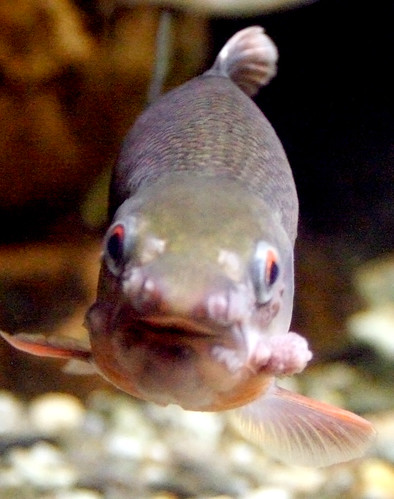
Researchers studying water and aquatic life have found males of several species of fish whose gonads don’t quite match up. In waterways around Seattle, some male English sole have proteins normally only found in females. Male Potomac River bass and sunfish have been found carrying immature eggs. Down in Nevada, male carp in a particular lake – one subject to Las Vegas wastewater runoff – have depressed levels of male sex hormones and smaller than average testes. And in California, male fish off the coast of LA and Orange County have been found with ovarian tissue in their testes. Feminized fish are also found in England, Japan, and Denmark.

The culprit? Many would have you look no further than that little pack of pills on your bedside table. Synthetic estrogens in hormonal birth control trick the body out of ovulating, but they don’t just stay in the body and build up forever. A woman takes her pill with her morning coffee, drinks her eight glasses of water a day, and eventually those hormones get flushed town the toilet. When wastewater is spilled or leaks into waterways (through leaky sewers and pipes, storm drain overflow, or from wastewater treatment centers), those hormones are released into the wild, where they act as endocrine disruptors for fish. The endocrine system regulates growth and development in all animals – disrupt it, and you get animals that don’t develop correctly.

Scientists have found relatively low levels of estrogens in most of the bodies of water examined, but those low levels have been enough to have an impact on the development of aquatic life, and many are concerned for the reproductive future of fish. If you’re not worried (you never really liked fish anyway), think about the worst case scenario: feminization of male fish leads to widespread reproductive failure, declining fish supplies, the collapse of the fishing industry, increased reliance on non-aquatic protein supplies, and not enough land for the necessary increase in agriculture. It would be a problem in the US, but for Japan it would be a disaster, and for non-industrial countries relying primarily on protein from fish it would probably be the beginning of the end.

But we’re not there yet. Doomsday scenario aside, there is something going on with all those estrogens. Many news reports have implied that the bulk of the blame lies with hormonal birth control (and, to a lesser extent, hormone replacement therapy), meanwhile ignoring the vast number of estrogen-mimics in the environment from pollutants. Chemicals contained in many detergents, in bath oils and some cosmetics, and in pesticides act as endocrine disruptors in the same fashion as synthetic estrodiol. Even more pervasively, plastics often contain ingredients that mimic estrogens – one of which, bisphenol A, has been linked to birth defects in humans. These chemicals are often referred to as ‘ubiquitous’ by researchers who realize that the compounds will be found (in varying degrees) in essentially any water test performed.

Hormonal birth control, meanwhile, may be one of the most sustainable inventions ever created – if we use it properly. Because pills are relatively expensive and difficult to distribute (both problems which probably wouldn’t be that hard to overcome), their use in developing countries has yet to become widespread. Giving women and families the option of hormonal birth control (along with condoms and education) could go a long way towards solving the population problem. Otherwise, dwindling resources coupled with increasing populations will likely lead to population control via genocide and war (as in Rwanda; Jared Diamond’s extraordinary book Collapse does a great job of analyzing that scenario).

It’s true that synthetic hormones in birth control are contributing to the feminization of fish. As a first world country, we should take the lead in developing birth control methods that are even more sustainable – both personally and globally. For the time being, women who would prefer birth control sans hormones can consider using a diaphragm or IUD.

Meanwhile, cutting back drastically on our nasty plastic habit would decrease the amount of trash in our landfills, the level of endocrine disruptors in our water, and our over-dependence on petrochemicals. That’s three problems in one fell swoop.

Researchers are working on ways to filter endocrine blockers out of wastewater, and no one is actually suggesting that women should stop using hormonal birth control. Still, the Pill is getting an undue amount of attention in the fish feminization scandal. We (the media, all of it) should put a little more emphasis on the plastics industry and the byproduct of our petrochemical dependence.

(fabulous fish photo by wistine)

Thursday, May 10, 2007

Pro-Choice Birth-Activist Reproductive Freedom Fighter


Radical doula Miriam Pérez believes that pro-choice activism and birth activism go hand in hand. Those who subscribe to the beliefs of either group don’t generally agree: pro-choicers are so caught up in protecting women’s rights NOT to parent, and midwifery groups so busy diligently advocating for pregnant women, that neither has the time to examine what the other has to offer (and, of course, not all midwives and doulas are pro-choice). But, Pérez points out, “Anti-choice activism and overly-medicalized birthing practices are both based on a lack of trust in women.”

Her Campus Progress article does a great job of pointing out the ways in which the two camps compliment each other. Both movements address “the narrowing scope of women’s choices.” They attempt to offer safety and support to women as they undergo difficult procedures, too often under difficult circumstances. And in both the delivery room and right-wing politics, the woman in question is forced to take a back seat to the fetus she carries. This, to Pérez, is the strongest correlation between birth- and pro-choice activism: “Both are attempts to fight back against rhetoric that prioritizes the unborn fetus instead of the adult woman.” The article also does a great job rounding up the basic facts and figures about home and hospital births.

But oh, these divisions! Pérez is right, birth activists and pro-choice activists have a lot in common. And they have a lot in common with those who advocate for comprehensive sexuality education. All three often have a lot in common with those who lobby for universal health care and for flex-time. When we talk about all of these issues, more often than not, we’re talking about the same thing: reproductive freedom. But abortion is a divisive issue, as are comprehensive sex ed and even universal health care for some. It’s true: allying abortion rights with universal health care would probably hurt the case for universal health care. So instead of getting together and agreeing that we’re all talking about the same thing (more or less), we divide it up into bits and pieces. In the end, though, all of those things affect reproductive freedom. It’s about the right to reproduce – or not – when and how we want, the right to affordable and accessible health care, the right to the knowledge we need to make informed decisions, the ability to make motherhood a viable part of our complex lives if we choose to, and the right (and the NEED) to be heard and supported when it comes to our reproductive choices – whether that means choosing not to continue a pregnancy or choosing to give birth naturally. All the little slivers of the overarching issue, put together, could mean huge advances for women’s equality.

Check out Miriam Pérez’s blog Radical Doula for lots more information on midwifery, reproductive freedom and progressive politics – it’s good stuff!

PS - thanks to Frank for the tip!

Thursday, April 26, 2007

Planned Parenthood's Wall of Protest

Oh, the age of user generated content. Planned Parenthood has created an interactive Wall of Protest, where users can post photos, videos, and comments about the Supreme Court's decision to uphold the Partial Birth Abortion Ban Act. I added my two cents. I wouldn't say it's an effective tool for change, but it created quite an impression to see all of those little thumbnails and know they're all people who are as outraged and frightened as me. Here are a few choice quotes:

Dear Supreme Court, By legally mandating my pain, suffering, injury, and endangerment in the face of a safer medical alternative, you are devaluing my humanity in the worst and most institutional way. Your brutality against women and your disrespect for valid Supreme Court jurisprudence will leave blood, shame, and torture on your hands until the end of time.

I don't tell you what to do with your penis, don't tell me what to do with my vagina.

(with a photo of a baby) Beautiful Sophia. A beautiful CHOICE in my life. Please keep abortions safe and legal.

(from a fella) Reactionary fundamentalism has no place making such laws. The hubris of this abortion ban strikes at the heart of Woman, Human, and American rights.

So, things have been a little crazy...

I worked a two-week stint of ten-hour days -- and as soon as that was over, I had a convenient couple of days of to move into (drumroll, please...) my new apartment! The last several days have been a flurry of moving and shopping for accouterments (like an absolutely beautiful set of dishes that I decided to splurge on a little, since hey, I'm going to be eating off of them for a while) and opening a bank account here (since at this point it's pretty clear I'll be here a while) and getting internet installed and having online Ikea dates with the Beau to pick out our furniture and... it's been a little overwhelming, but also very gratifying.

Meanwhile, I've missed out on commenting on all kinds of things -- especially the Supreme Court's unfortunate decision to uphold the Partial Birth Abortion Act as constitutional, and North Dakota's trigger law (which will make abortion illegal in the state immediately upon a reversal of Roe v. Wade, heaven forbid). At this point, pretty much anything I would have said has been said. It's all fucking terrifying.

In much better news: Massachusetts has joined the list of states which will decline federal money for abstinence-only programming! Way to go, Deval. We knew you could do it.

Over at Eden Fantasys, my review of the Swinging Pendulum has gone up, as well as an article I wrote for them about Phthalates and sex toys -- check it out!

So: my apologies for the dearth of posts, readers dear. Things ought to get back to normal around here now -- I hope -- for a few weeks at least!

(also: HAPPY BIRTHDAY to my favorite veggie connoisseur!)

Friday, March 30, 2007

Keroack Resigns

Eric Keroack has resigned as head of the federal Office of Population Affairs due to some legal action being taken against his MA based private practice. In a message to their pro-choice action network, NARAL is calling it a victory. I'm glad to be rid of the guy too, but I don't see how this is a victory. If he had been forced to resign, maybe because... oh, I don't know, maybe because he doesn't believe in providing birth control? Then it would be a victory. As it is, since the protests of Dems in congress and reproductive rights activists around the country didn't seem to register with the Administration, Bush will probably just appoint more of the same.

But we can hope. And like I said, good riddance. Click here to go send a letter urging President Bush to "take this opportunity to appoint a medical professional who actually believes in birth control to lead the nation’s family-planning program."